


Stop Fighting Your Fabrics: Why IR Beats Hot Air
If you’ve ever tried to cure or dry a thick composite fabric using hot air, you know the frustration. We see it all the time on the shop floor. You crank up the heat, but the air just bounces off the surface. The outside of the fabric gets scorched—maybe even burns—while the middle stays cold. It’s a losing battle because dense textiles are basically built-in insulators. The heat just can’t get in.
Heating from the inside out
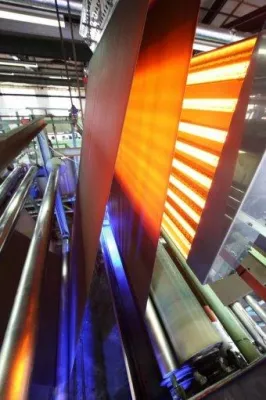
This is where IR lamps change the math. Instead of trying to warm up the air around the fabric, IR emitters send waves straight into the material. Think of it as a shortcut. These waves dive past the surface and start shaking up the molecules inside the fabric itself. You get heat generated from the core outward. Because the energy doesn’t have to fight through the weave of the textile, the center hits the target temperature way faster. No more burnt faces and raw centers.
Making them last (without the headaches)
Nobody wants to stop production to swap out a dead lamp. That’s why we build these to last 5,000 hours. But here is the trick: it’s all about the balance of the filament tension and the gas fill. Some people try to “fix” a bad setup by just cranking the wattage. Don’t do that. You’ll just fry the filament and be back at square one. You also have to pick the right wavelength for your specific fabric. Shortwave is great if you just need a quick surface flash-off. But if you’re dealing with deep penetration in heavy textiles? Medium-wave is your workhorse.
The trade-offs
Look, radiative heating is fast. Like, really fast. It leaves blower systems in the dust. But it has a quirk: it’s line-of-sight. If your fabric has deep folds or the thickness varies, you’re going to get cold spots. You can’t just blast it with more power to fix that. Instead, you have to get the distance and the angle of the lamps just right to make sure the heat hits every inch of the web evenly.