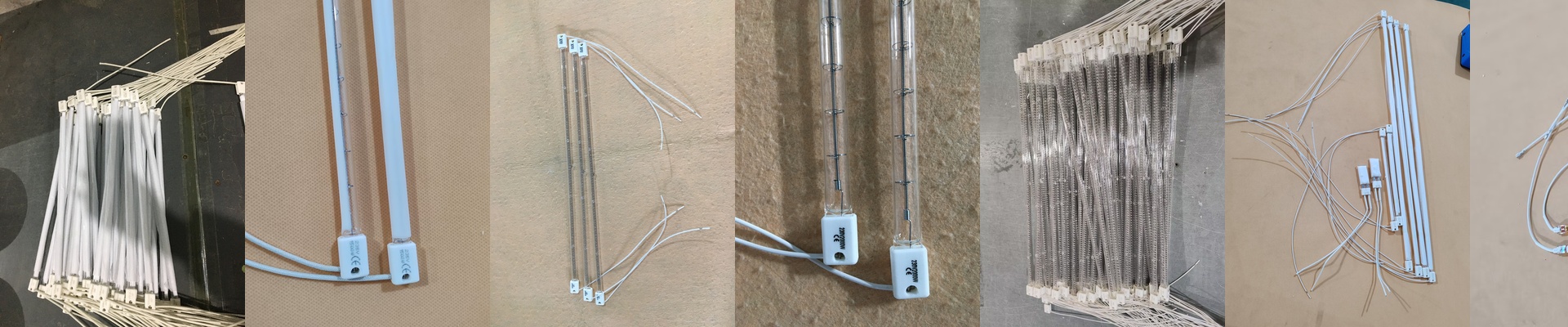

Getting Your Textile Curing Right: It’s All in the Mirror
When you’re curing textiles, you’re walking a thin line. You need enough heat to set the dyes and resins perfectly, but one second too long or a few degrees too hot, and you’ve scorched the fabric. It’s a headache. The secret isn’t just the lamp—it’s the reflector. If you don’t get the geometry right, you’re basically paying to heat up the inside of your machine chassis instead of your product. Stop wasting your heat Here’s the thing: a standard quartz lamp throws heat in every direction. 360 degrees. If you just hang a lamp in the air, half your energy vanishes instantly. That’s why we use parabolic or elliptical shapes. They act like a mirror, grabbing that stray heat and shoving it back down toward the fabric. By tweaking the focal point, we turn a scattered glow into a tight, powerful beam. The best part? You can hit your target temperatures using lower-wattage lamps. Your electrical panels will thank you. The “Hot Spot” Struggle The shape of the reflector changes everything. A deep curve gives you a concentrated blast of heat in the center. A shallower arc spreads it out, giving you a more even soak. It’s a balancing act. Go too intense, and you’ll burn a hole right through the cloth. Go too soft, and your curing cycle drags on, which kills your line speed. Nobody wants a slow line. The Trade-off (And the Catch) There is a catch, though. When you angle a reflector to push more energy downward, some of that heat bounces right back into the lamp’s quartz tube. The lamp runs hotter. Much hotter. If you don’t have the right cooling fans to move that air, your filaments are going to burn out way sooner than they should. It’s a simple fix, but if you forget it, you’re looking at constant downtime. Getting it into your shop We built these systems to be drop-in replacements. You don’t need to rebuild your entire tunnel. Just double-check your mounting footprint and the distance from the lamp to the conveyor. As long as the light path lines up with your fabric, you’re good to go.